Cladding Preparation For Installation
Important Information
Preparation and Installation Overview
Prime Before Installing
After cedar has achieved equilibrium moisture content and before it is installed, a coating on all surfaces is recommended. The type of coating will vary with final finish selected. The coating protects the wood from water penetration, helps prevent staining caused by mildew and extractives and can increase the service life of top coats. The following coatings have proven themselves in field testing (see table below).
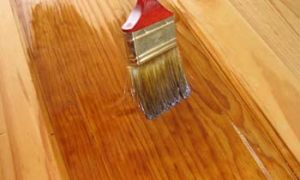 Check with your paint dealer to make sure that the prefinish coat you select is compatible with the intended finish coat. For example, clear water repellants should not be used where the intended finish is a bleaching oil.
How do I prime Western Red Cedar Cladding before installing?
Below are the recommended priming procedures for Western Red Cedar Cladding
| Type of Finish Coat | Recommended Priming Coat |
|---|---|
| Natural and semi-transparent stains | Coat all surfaces with the stain |
| Solid color stains and paints | Coat all surfaces with an alkyd oil stain-blocking primer. Alternatively, use a clear water repellant on back of cladding and the primer on face and edges |
| Bleaching Oils | Prime all surfaces with a coat of the bleaching oil |
What type of nails or fasteners should I use for Western Red Cedar cladding?
Hot-dipped galvanized, aluminum and stainless steel nails are all corrosion-resistant and can be used to nail Western Red Cedar. Other types of nails are not recommended. They can rust and disintegrate and react adversely with the natural preservative oils present in cedar resulting in stains and streaks. Copper nails also react with cedar and should not be used. Stainless steel nails are the best choice, especially if the cladding is to be finished with transparent stain. Use No.304 stainless for general cladding applications and No.316 for seacoast exposures.
What type and size of of nails should I use for Western Red Cedar cladding to avoid splitting?
For best results use “splitless” cladding nails. These have thin shanks and blunt points to reduce splitting. For greater holding power, nails with ring threaded or spiral threaded shanks are recommended. Nails with textured heads can be used to reduce glossy spots at the nails when finishing (see figure on right for nail types).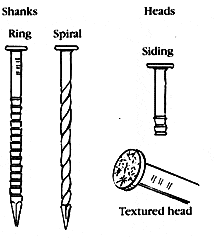
Nails should be driven with care. Heavy nailing distorts the wood and may cause splitting. At mitered corners, near edges and near ends, nail holes may need to be pre-drilled to avoid splitting.
The size of the nails to use depends on the type and thickness of cladding. Good building practice is to use nails long enough to go through underlying materials, such as sheathing and insulation, and penetrate at least 1-1/4″ (32mm). See table below for recommended nail lengths for various thicknesses of cladding.
Cladding should be fastened to each stud or furring strip with nails spaced at a maximum of 24″ (61cm) on center, nail placement depends on the cladding pattern and width. The key is to fasten the cladding securely without preventing it from moving in response to the moisture content of the air. In general, each piece of cladding must be nailed independently.
Important: Nailing overlapping pieces together restricts the natural movement of each piece and will cause splitting.
What is the minimum recommended nail length when installing Western Red Cedar cladding?
Below is a table containing the nail length for various Western Red Cedar cladding profiles.
| Cladding Type | Thickness (in.) | Thickness (mm) | Nail Size |
|---|---|---|---|
| Bevel | 1/2 or less | 13 mm or less | 2 (6d) |
| 5/8 | 16 mm | 2 (6d) | |
| 3/4 | 19 mm | 2-1/4 (7d) | |
| 7/8 & greater | 22 mm or greater | 3 (10d) | |
| Boards, Tongue & Groove, and Channel | 5/8 | 16 mm | 2 (6d) |
| 3/4 | 19 mm | 2 (6d) | |
| 7/8 | 22 mm | 2-1/4 (7d) | |
| Battens | 3/4 | 19 mm | 3 (10d) |
Wall Construction
Like all cladding materials, Western Red Cedar performs best when installed properly on a suitable frame. Cedar cladding should be securely nailed to framing members, furring members or to blocking between framing members. Lumber sizes and spacing for blocking and furring are shown in the table below.
Stud Walls
Stud walls generally require no special preparation for horizontal cladding installation. Cladding should be nailed into studs at maximum 24″ (61cm) centers when applied over wood-based, solid sheathing and 16″ (41cm) on center when applied without sheathing. In those areas where an air space between cladding and sheathing is desired, nail cladding to furring strips.
For vertical cladding installation, stud walls require horizontal blocking lines or furring strips. When applied over wood based sheathing, vertical cladding should be nailed to horizontal blocking or other wood framing members not exceeding 36″ (91cm) on center when face nailed or 32″ (81cm) on center when blind nailed. When installed without sheathing, vertical cladding should be nailed to wood framing or blocking members at 24″ (61mm) on center. Check your local code to verify requirements.
Masonry Walls
Masonry walls require furring strips for horizontal and vertical cladding installation. Furring strips must be thick enough to allow for nail penetration of 1-1/2″ (38mm) into solid wood. Check your local code to verify requirements.
What size of lumber and what spacing should be used for installing Western Red Cedar cladding for blocking and furring?
Below is a table containing the lumber widths and spacing for installing Western Red Cedar cladding for blocking and furring.
| Minimum Lumber Size (in.) | Minimum Lumber Size (mm) | Maximum Center Spacing (in.) | Maximum Center Spacing (cm) | |
|---|---|---|---|---|
| Blocking | 2 x 2 | 51 x 51 | 24 | 61 |
| Furring over Sheathing | 1 x 2 | 25 x 51 | 24 | 61 |
| Furring over masonry walls | 2 x 2 | 51 x 51 | 24 | 61 |
How do I apply Western Red Cedar cladding over rigid foam sheathing?
Rigid foam sheathing has an insulation value superior to that of traditional lumber and plywood sheathings. However, it has little or no nail holding power and using rigid foam sheathing as a nailing base for cedar cladding is not recommended. For best results with rigid foam and other sheathing products, follow the nailing recommendations as to nail type, positioning, penetration and spacing. The table below provides nail length recommendations for cladding and foam sheathing systems.
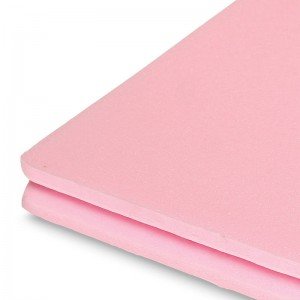 Foam sheathing panels vary in moisture permeability but are generally considered as good moisture barriers. They should be used with a continuous film vapour retarder on the inside wall under the interior finish or with foil-backed gypsum board. Rigid foam sheathing can cause moisture to accumulate on the back of cladding and cause staining, buckling and damage to finish coats. The following recommendations are meant to minimize potential problems when Cedar cladding are applied over rigid foam sheathing:
- Use thicker cladding patterns in widths of 8″ (203 mm) or less. Thick, narrow cladding is more stable than thinner, wider patterns and better able to resist dimensional changes.
- Use kiln-dried cladding over rigid foam sheathing. This is the most stable cedar cladding.
- Proper prefinish is essential. Follow the priming recommendations given in this publication before installing cladding.
- Use light color finish coats to maximize heat reflection and reduce dimensional movement.
- In severe climates, an air space between cladding and rigid foam sheathing can be created by fastening furring strips to the sheathing before installing cladding (see Wall Construction). Air spaces allow for the venting of accumulated moisture.
- In all cases it is recommended that building paper or an equivalent building wrap be applied over the foam sheathing.
What is the recommended minimum nail length for Western Red Cedar cladding over rigid foam sheathing?
Below is a table containing the minimum nail lengths for installing Western Red Cedar cladding over rigid foam sheathing.
| Cladding and Sheathing Thicknesses | Nail Length | |
|---|---|---|
| Inches | Millimeters | |
| 1/2″ (13 mm) cladding and 1/2″ (13 mm) foam sheathing | 2-1/4 | 57 mm |
| 1/2″ (13 mm) cladding and 3/4″ (19 mm) foam sheathing | 2-1/2 | 64 mm |
| 1/2″ (13mm) cladding and 1″ (25mm) foam sheathing | 3 | 76 mm |
| 5/8″ (16mm) or 3/4″ (19mm) cladding and 1/2″ (13mm) foam sheathing | 2-1/2 | 64 mm |
| 5/8″ (16mm) or 3/4″ (19mm) cladding and 1″ (25mm) foam sheathing | 3 | 76 mm |
How do I prevent moisture from accumulating when installing Western Red Cedar cladding?
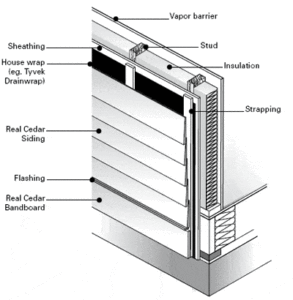
High humidity output from washers, dryers, showers, kitchens and other sources, combined with today’s energy-efficient construction, can result in a build up of interior moisture vapor. This vapor migrates through the fabric of a building from the warm interior to the cold exterior, and when it condenses to water can cause structural damage to cladding and finishes.
Vapor barriers installed on the warm side of the wall prevent most of the migration of moisture vapor but they have disadvantages. Residual vapor must be allowed to escape to the outside. Building paper installed on the outside face of the sheathing helps prevent rain and snow from penetrating the walls and also allows the escape of moisture vapor.
Proper wall construction includes the use of gas permeable paper and vapor barriers, such as DuPont™ Tyvek® DrainWrap™ (see diagram above). These are extremely effective in helping to prevent moisture problems. DuPont™ Tyvek® DrainWrap™ provides a building drainage system and weather barrier for areas that require maximum water drainage
How much ground clearance do I need when installing Western Red Cedar cladding?
Keep the lowest edge of cladding at least 6″ off the ground and coat end grain at the bottom of vertical cladding with water repellant.
What kind of caulking do I use when installing Western Red Cedar cladding?
Thorough caulking of all joints is recommended including butt joints and where cladding contacts openings or trim. Use only non-hardening caulks such as polyurethane, polysulfide or latex-silicone. Pure silicon caulks do not work well on cedar and are not recommended.
Do not reduce the cladding overlap recommendations given in the installation sections of this publication. To do so could result in damage from wind-driven water.