Important Information
Bevel Cladding Characteristics
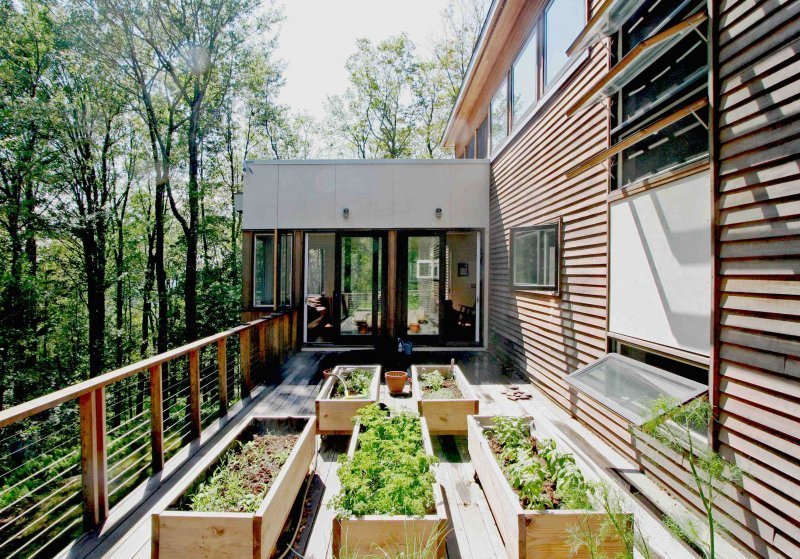
Western Red Cedar bevel cladding is the most widely-used cladding type. It is produced by resawing lumber at an angle to produce two pieces thicker on one edge than the other. The manufacturing process results in pieces with one face saw textured. The other face is smooth or saw textured depending on the grade and customer preference. Bevel cladding is installed horizontally and gives an attractive shadow line which varies with the thickness of cladding selected.
Finger-Joined Bevel
WRCLA members also produce finger-joined bevel cladding in clear and knotty grades. The precision-fitted joins are virtually invisible and stronger than the surrounding fiber. Finger-joined bevel cladding is available in lengths up to 16 feet and provides the handsome appearance and all-weather performance of premium cedar cladding. Builders appreciate both the convenient long length tally and the speed and ease of installation with fewer field joins.
What Grades Are Available For Western Red Cedar Bevel Cladding?
Western Red Cedar bevel cladding is available in clear and knotty grades. Clear cladding gives premium quality appearance and is ideal for prestigious, upmarket applications. Knotty cladding has warmth and casual charm and is ideal for homes, cottages, club-houses and applications where a rustic appearance is desired.
Clear bevel cladding is graded for smooth face use with the exception of Rustic which is graded for saw textured use only.
Clear V.G. Heart
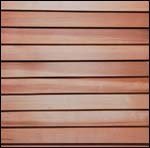
This is the highest bevel cladding grade. All Clear V.G. Heart grade is sawn vertical grain (edge grain) and is kiln dried. Pieces have a smooth face of decay-resistant heartwood and are free from growth characteristics that affect appearance or performance. Pieces have excellent dimensional stability and hold finishes exceptionally well.
Available solid wood or finger-joined.
Grading Rule Paragraph
NLGA 201a
WCLIB 106-aa
WWPA 21.11
A Clear
This is a fine appearance grade that allows only slightly more growth characteristics than Clear Heart. Pieces are of mixed grain.These mixed grain (vertical and flat) pieces are graded from the surfaced face.
Typically sold with a percentage of B grade (NLGA 201C/WCLIB 106b/WWPA 21.13)
Grading Rule Paragraph
NLGA 201b / 201c
WCLIB 106-a
WWPA 21.12
Common specifications are A and Better and A and Better with a percentage of B Clear allowed.
Rustic
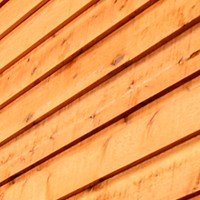
Rustic grade bevel cladding is recommended for use as sidewall covering where the distinctive charm of a rustic saw textured appearance is desired. This grade allows limited characteristics that do not detract from serviceability.
Available solid wood or finger-joined.
Grading Rule Paragraph
NLGA 201d
WCLIB N/A
WWPA N/A
Select Knotty*
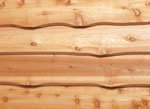
Knots and other natural features define the visual character of knotty cladding. In Select Knotty grade, knots are sound and tight. Available rough or dressed, kiln-dried or unseasoned and smooth or saw textured. Some companies may supply this grade with knots glued on the reverse face.
Common specifications are Select Knotty with a percentage of Quality Knotty allowed.
Grading Rule Paragraph
NLGA 205a
WCLIB 111-e
WWPA N/A
Architect Knotty®
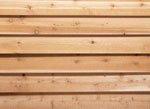
This product is intended to be fully usable with the resawn face exposed after trimming to fit the stud wall spacing. Contains no open characteristics or through defects. The product allows the use of adhesives on the reverse face to secure knots. Architect Knotty® is particularly well suited for factory priming or finishing. Supplied kiln-dried.
Architect Knotty® is a registered trademark of the WRCLA
Grading Rule Paragraph
Propriety WRCLA
NLGA – National Lumber Grades Authority
WCLIB – West Coast Lumber Inspection Bureau
WWPA – Western Wood Products Association
What sizes are available for Western Red Cedar Bevel Cladding?
Western Red Cedar Bevel Cladding is available in the following sizes:
| Nominal Size (in.) | Type | Grade |
|---|---|---|
| 1/2 x 4 1/2 x 6 1/2 x 8 11/16 x 6 11/16 x 8 3/4 x 6 3/4 x 8 3/4 x 10 | Plain Bevel | Clear V.G. Heart A Rustic B C Proprietary |
| 5/8 x 6 5/8 x 8 11/16 x 6 11/16 x 8 11/16 x 10 3/4 x 6 3/4 x 8 3/4 x 10 7/8 x 8 7/8 x 10 7/8 x 12 | Plain Bevel | Select Knotty Architect Knotty Quality Knotty Proprietary |
| 3/4 x 6 3/4 x 8 3/4 x 10 5/4 x 8 5/4 x 10 | Rabbetted Bevel | |
| 7/8 x 10 7/8 x 12 | Wavy Edge Bevel |
* Not all sizes are available in all grades.
Cladding may be available finger joined or finger joined and edge glued.
What Is the Coverage of Western Red Cedar Bevel Cladding?
Bevel cladding coverage can be found in the following table for seasoned Western Red Cedar Cladding
Assuming minimum one inch overlaps. Larger overlaps can be used, particularly on wider bevel cladding such as 10″ and 12″ pieces.
| Nominal Width (in.) | Dressed Width (in.) | Exposed Face (in.) | Linear Feet Factor | Surface Measure |
|---|---|---|---|---|
| 4 | 3-1/2 | 2-1/2 | 4.80 | 1.60 |
| 6 | 5-1/2 | 4-1/2 | 2.67 | 1.33 |
| 8 | 7-1/2 | 6-1/2 | 1.85 | 1.23 |
| 10 | 9-1/2 | 8-1/2 | 1.41 | 1.18 |
| 12 | 11-1/2 | 10-1/2 | 1.14 | 1.14 |
For More Information
See the Cladding Calculator in the cladding section to calculate the required cladding for your project.
Where can I find technical information for Western Red Cedar Bevel Cladding?
The following information is required when specifying bevel cladding products:
| Specification Information Required | Sample Specification |
|---|---|
| Species: Western Red Cedar | WRCLA Western Red Cedar |
| Product Pattern and Intended Use: Cladding is used as an exterior cladding to provide both weather protection and architectural style. The designer may choose from plain bevel, rabbetted bevel, or wavy edge bevel. | Plain Bevel Cladding |
| Size: Specify the nominal size of the product. | 1/2 x 6 in. |
| Grade: The grade of the product governs its overall quality. Refer to WRCLA specification literature or grading agency rule books for available grades. | Clear V.G. Heart |
| Grading Agency Paragraph: To ensure that the product meets a written standard, an agency grade paragraph should be referenced. | NLGA para. 201a |
| Moisture Content: Specify whether the product is to be green (unseasoned) or kiln-dried. | Kiln dried |
| Surface to be exposed: Specify the application orientation to assist the supplier in shipping the right product for the job. | Surface face |
| Quantity: Express in surface measure the quantity required. See table for factor to convert square feet to surface measure. | 5500 surface measure |